
Wetherspoons vs Chipotle: How Two Chains Mastered Affordable Quality on Different Continents
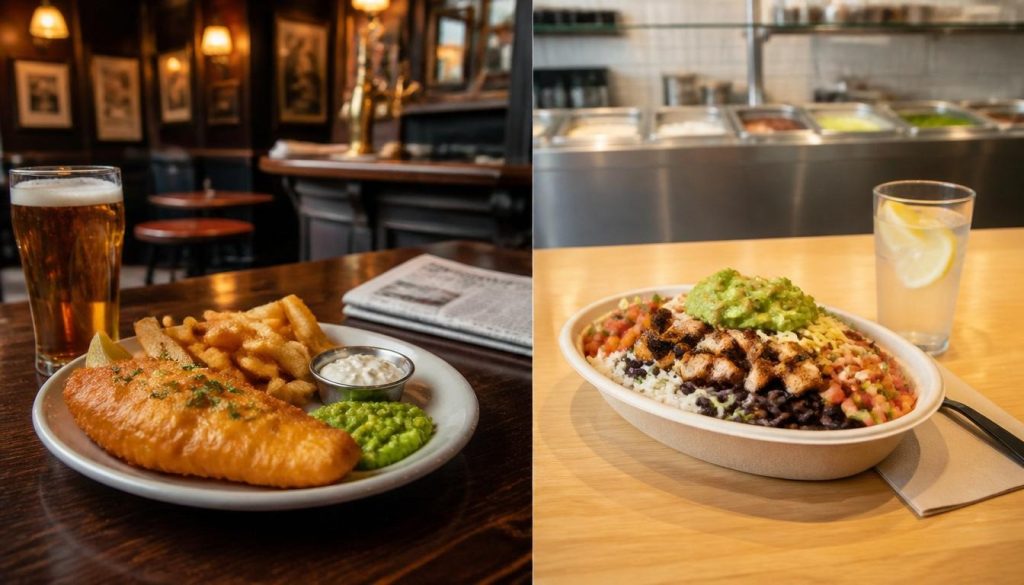
In the world of chain restaurants, there is a small group of brands that have figured out something genuinely difficult: how to serve quality food at prices significantly below their competitors without cutting corners in ways that customers notice. Wetherspoons in the United Kingdom and Chipotle in the United States both belong to this exclusive club, and they achieved their positions through strategies that are as different as the countries they operate in. One is a sprawling pub chain serving full English breakfasts and real ales in converted historic buildings. The other is a streamlined Mexican-inspired assembly line turning out customizable burritos and bowls at speed. What they share is a reputation for delivering real value — and understanding how each one does it can make you a smarter diner on both sides of the Atlantic.
Wetherspoons: Volume, Efficiency, and Victorian Architecture
Wetherspoons operates over 800 pubs across the United Kingdom and Ireland, making it the largest pub chain in Britain by a significant margin. The chain’s founder, Tim Martin, built the business on a contrarian insight: you could offer pub food and drinks at dramatically lower prices than the competition by eliminating the things customers did not actually care about — background music, elaborate décor, and extensive table service — while investing in the things they did care about, namely food quality, drink selection, and comfortable buildings.
The wetherspoons menu reflects this philosophy perfectly. It covers an enormous range of British pub staples: full English breakfasts, burgers and grills, steaks, fish and chips, curries, jacket potatoes, salads, and a rotating selection of real ales and craft beers sourced from independent breweries across the UK. A full meal with a pint typically costs between six and ten pounds — roughly half what you would pay at most independent pubs for comparable food.
The chain keeps costs low through massive bulk purchasing power, a no-music policy that eliminates expensive licensing fees, app-based ordering that reduces staffing needs, and the clever strategy of purchasing large, unusual buildings — former banks, cinemas, theaters, courthouses, and churches — at below-market rates. These buildings provide enormous floor space for high customer volume while giving each location a unique architectural character that no purpose-built chain restaurant can replicate. For tourists visiting the UK, understanding the wetherspoons menu and finding the nearest location is one of the simplest ways to eat well on a budget while experiencing genuinely interesting British architecture.
Chipotle: Transparency, Customization, and the Assembly Line
Chipotle took a fundamentally different approach to the affordable quality equation. Instead of offering a massive menu at low prices, Chipotle offers a narrow menu with extreme customization at moderate prices. The entire ordering experience is built around a visible assembly line where customers watch their meal being constructed ingredient by ingredient — a design choice that simultaneously builds trust, enables personalization, and moves the line at remarkable speed.
What sets Chipotle apart for health-conscious diners is the level of nutritional transparency the chain provides. Every single ingredient has published calorie and macronutrient data, and tools like the Chipotle Nutrition Calculator allow customers to build their exact meal digitally before walking into the restaurant. You can toggle individual toppings on and off and watch the protein, carbs, fat, and calorie totals update in real time. For anyone following a structured nutrition plan — whether that is a calorie deficit, a high-protein diet, or a specific macro split — this level of precision is genuinely unmatched in the fast-casual industry.
A typical Chipotle meal costs between nine and thirteen dollars depending on protein choice and additions like guacamole. That positions it slightly higher than traditional fast food but well below sit-down dining, and the portion sizes are generous enough that many customers find a single bowl sufficient for two meals.
How Each Chain Defines Value Differently
The word value means different things in different dining cultures, and Wetherspoons and Chipotle illustrate this perfectly.
At Wetherspoons, value is primarily about price. The chain’s core promise is that you can get a full meal and a drink for less money than virtually anywhere else in the UK that offers comparable quality. The food does not pretend to be gourmet, and the service is minimal by design. But the price-to-satisfaction ratio is exceptionally high, and for budget-conscious diners, students, families, and travelers, that straightforward affordability is the most important factor in choosing where to eat.
At Chipotle, value is defined more by control and quality of ingredients. Chipotle’s prices are not the lowest in the American fast-food landscape — several competitors offer cheaper meals. But the combination of fresh, responsibly sourced ingredients, complete customization, and detailed nutritional transparency creates a value proposition that appeals to a customer who is willing to pay a few dollars more for the ability to eat exactly what they want while knowing exactly what is in it. The Chipotle Nutrition Calculator is not just a nice feature — it is central to the brand’s promise of giving customers full ownership over their meal.
Menu Philosophy: Breadth vs Depth
The menu strategies at these two chains could hardly be more different, and both approaches work brilliantly within their respective contexts.
Wetherspoons takes the breadth approach. The menu spans dozens of items across breakfast, lunch, and dinner, covering multiple cuisines from traditional British to Indian curry to American-style burgers. This variety ensures that any group — whether it is a family with picky eaters, a mixed group of friends with different dietary preferences, or a solo traveler who has been eating fish and chips for three straight days and desperately wants something different — can find something appealing. The trade-off is that no single item on the menu is likely to be the absolute best version of that dish you have ever had. It is consistently good across a wide range rather than exceptional in a narrow one.
Chipotle takes the depth approach. The menu has essentially five formats — burrito, bowl, tacos, salad, and quesadilla — but the customization options within each format create thousands of possible combinations. This depth means that a fitness enthusiast building a high-protein low-carb bowl and a vegetarian building a loaded burrito with sofritas and extra guacamole are both ordering from the same menu and both getting exactly what they want. The trade-off is that if you do not enjoy Mexican-inspired flavors, Chipotle has nothing else to offer you.
Which One Should You Choose?
If you are in the United Kingdom and you want an affordable, filling meal in a pub with genuine character and a cold pint of properly kept real ale, Wetherspoons is the obvious choice. Browse the wetherspoons menu, find a location in an interesting building, and enjoy one of the most reliable budget dining experiences available anywhere in Britain.
If you are in the United States and you want a customizable, nutrition-transparent meal that fits your specific dietary goals without requiring you to cook at home, Chipotle earns its reputation. Run your order through the Chipotle Nutrition Calculator before you go, and walk in knowing exactly what you are going to eat and how it fits your daily targets.
Both chains prove the same fundamental point: affordable does not have to mean low quality. It just requires a business model smart enough to cut costs where customers do not notice and invest where they do. Wetherspoons cuts music and décor to invest in beer selection and building character. Chipotle cuts menu breadth to invest in ingredient quality and nutritional transparency. Different strategies, different continents, same result — millions of loyal customers who feel like they are getting more than they paid for.