
Chainsaw Parts Explained: A Complete Guide to Maintenance and Replacement
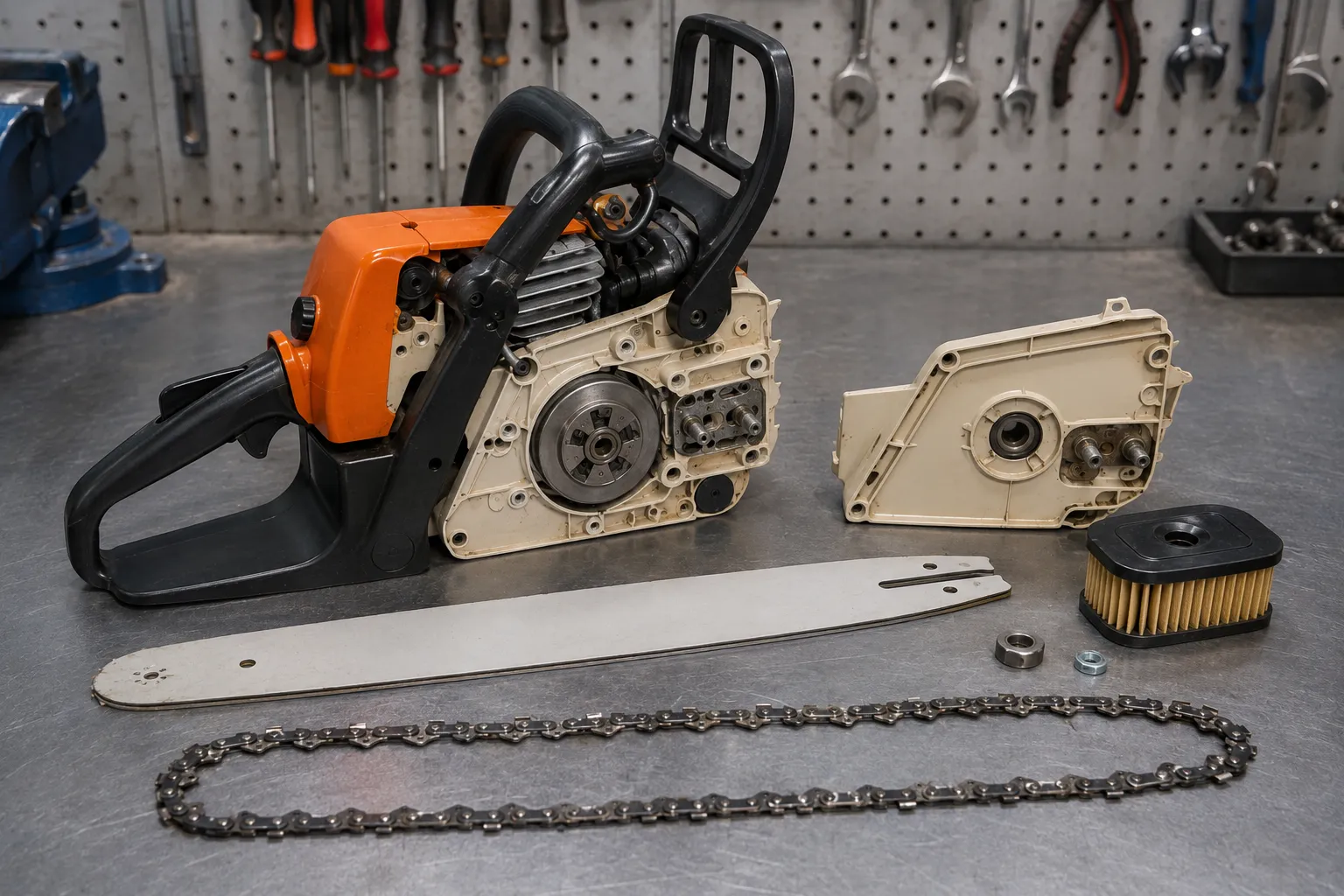
A chainsaw looks simple from the outside, but it is really a collection of parts that all have to work together under a lot of stress. When the saw runs well, you barely think about any of it. When something wears out or breaks, the whole tool becomes useless until you figure out which piece failed. Knowing the main parts, what each one does, and when to replace it is what separates owners who keep a saw running for years from those who toss it after one bad season. Sourcing matters too, and buying from a dependable chainsaw parts manufacturer often decides whether a replacement lasts or fails within weeks, which is why many buyers now compare a trusted chainsaw parts manufacturer in china against pricier local options before they commit. This guide walks through the parts that matter most.
The chain
The chain is the part that does the actual cutting, and it is also the part that wears fastest. It is a loop of linked cutters that spin around the guide bar, and every one of those cutters has to stay sharp to work properly. A dull chain does not just cut slowly. It forces the engine to work harder, burns more fuel, and puts extra strain on every other part of the saw.
Most owners can sharpen a chain themselves with a round file and a little practice, and doing it regularly is one of the best habits you can build. Even so, chains do not last forever. After enough sharpenings the cutters get too short to bite properly, and it is time for a replacement. Keeping a spare chain on hand means you never have to stop a job just because one went dull.
The guide bar
The guide bar is the long metal blade the chain rides around. It takes constant friction and heat, so it wears down over time even with good care. A worn bar develops uneven grooves that make the chain sit crooked, which leads to sloppy cuts and faster chain wear. Flipping the bar over every so often helps it wear evenly and stretches its life.
Keep the bar clean and make sure the oil holes are clear, since a starved bar overheats and warps. When you see burn marks, a widened groove, or a bar that pinches the chain, replacement is the smart move. A cheap new bar is far less trouble than the damage a bad one causes.
The sprocket and clutch
The sprocket is the toothed wheel that drives the chain, and it lives near the clutch, which engages the chain when you press the throttle. These parts work as a team, and they wear together. A worn sprocket develops deep grooves where the chain rides, and once that happens it chews through chains much faster.
A good rule is to replace the sprocket roughly every couple of chains, since running a fresh chain on a worn sprocket wastes both. The clutch itself lasts longer, but if the chain spins at idle or fails to engage under throttle, the clutch is usually the reason. These are less common repairs, but knowing the symptoms saves you from misdiagnosing the problem.
The air filter
The air filter keeps sawdust and grit out of the engine, and on a chainsaw it clogs fast because the tool creates so much fine debris. A blocked filter chokes the engine, robbing it of power and making it run rich, which fouls other parts over time. This is one of the easiest parts to maintain and one of the most neglected.
Clean the filter often, tapping out loose dust or washing it if the type allows, and let it dry fully before reinstalling. Filters are cheap, so replace one that is torn or too clogged to clean rather than nursing it along. A clean filter keeps the whole engine healthier.
The spark plug
The spark plug ignites the fuel, and a worn or dirty plug causes hard starting, rough running, and weak power. Plugs are inexpensive and easy to reach, so checking one is a quick first step whenever a saw runs poorly. Look for heavy carbon buildup, a worn electrode, or damage to the tip.
Cleaning a plug can buy you time, but replacing it is cheap insurance and often fixes starting problems instantly. Keeping a spare plug in your kit means a fouled one never ends your workday.
The fuel and oil systems
Chainsaws depend on two separate systems, and mixing them up causes real trouble. Gas models run on a fuel and oil mix that lubricates the engine, while a separate reservoir feeds bar oil to the chain. Old or wrong fuel is one of the top reasons saws fail to start after sitting, since stale mix gums up the carburetor.
Fuel lines crack and harden with age, and a cracked line lets in air that ruins how the engine runs. The bar oil system needs attention too, since a blocked oiler starves the chain and bar of lubrication. Fresh fuel, clean lines, and a working oiler prevent a surprising share of chainsaw problems.
Safety parts you should never ignore
The chain brake stops the chain almost instantly during kickback, and it is the single most important safety part on the saw. Test it regularly and never run a saw with a brake that feels loose or slow. The hand guard, throttle lockout, and chain catcher all play their part too, and none of them should be bypassed or left broken.
These parts protect you, not the tool, so treat any fault in them as an immediate reason to stop and repair. A saw that cuts well but cannot stop safely is not worth the risk.
Repair or replace, and where to buy
Not every worn part means a new saw. Chains, bars, sprockets, filters, and plugs are all cheap and simple to swap, and keeping a small stock of them means most fixes take minutes. Bigger repairs, like a failed engine or a cracked case, are where you have to weigh the cost of parts and labor against the price of a new saw.
Quality matters most when you buy replacements. A bargain part that wears out fast costs more in the long run than a well made one, so read reviews, match parts to your exact model, and buy from sellers with a track record. Take care of the parts, replace them at the right time, and a good chainsaw will serve you for many seasons.